How sales systems, documented processes and coaching can reduce the risk of relying too heavily on individual performers
There was a problem nobody expected. The business had a great salesperson. They consistently exceeded target, had strong relationships with key customers, knew exactly how to navigate difficult conversations and seemed to have an instinct for knowing when to push, when to listen and when to close.
They were the person everyone went to when a deal was stuck. Then they resigned. Suddenly, the business was faced with an uncomfortable question. How much of the sales success belonged to the business, and how much belonged to that individual? The salesperson took their experience, relationships and knowledge with them. What remained was a sales team trying to work out what had made that person so successful in the first place. This is a risk many growing businesses overlook.

When your best salesperson becomes the sales system
High-performing salespeople are incredibly valuable. The problem occurs when their individual approach becomes the unofficial sales process. They know which questions to ask. They know how to qualify an opportunity. They know which customers need more attention. They know how to handle objections. They know what to say when a prospect says, “Your competitor is cheaper.”
But if none of this knowledge has been documented, taught or shared, the business may have a salesperson rather than a sales system. When that person leaves, the team is left trying to recreate years of experience through trial and error. That can lead to inconsistent customer experiences, missed opportunities, longer sales cycles and a pipeline that suddenly becomes much harder to manage.
A repeatable sales process protects the business
A strong sales process does not mean turning salespeople into robots. Quite the opposite. It gives salespeople a clear framework while still allowing them to bring their own personality and experience to customer conversations.
A documented process might establish:
• How leads are qualified
• What information needs to be uncovered during discovery
• How opportunities move through the pipeline
• Which questions should be asked at different stages
• How customer needs are connected to value
• How objections are handled
• When and how follow-up should occur
• What information needs to be recorded in the CRM
• How opportunities are reviewed and coached
The goal is not to create unnecessary administration. The goal is to make good selling repeatable. At Healthy Business Builder, our approach to Sales Training focuses on tailoring training around the challenges of the individual business and sales team, rather than relying on a generic, off-the-shelf program.
Your best salesperson should be teaching, not just selling
One of the biggest opportunities businesses miss is capturing the knowledge of their top performers.
Instead of simply asking, “How much did you sell this month?”, sales leaders should also ask:
• What are you doing that is working?
• What questions are they asking?
• How are they opening conversations?
• How do they identify genuine opportunities?
• How do they build trust?
• How do they respond when customers push back on price?
• How do they know when an opportunity is ready to progress?
These behaviours can become valuable training material for the wider team. This does not mean copying everything a top salesperson does. Some of their success may come from personality, territory, relationships or experience. The objective is to identify the transferable behaviours that other salespeople can learn and apply.
This is particularly important because high individual performance does not automatically mean there is a strong sales process behind it. Healthy Business Builder recently explored this issue in its blog, The Top Performer Who Wasn’t Actually the Best Salesperson, which looks at why coaching, behaviours and sales process consistency matter alongside individual talent.
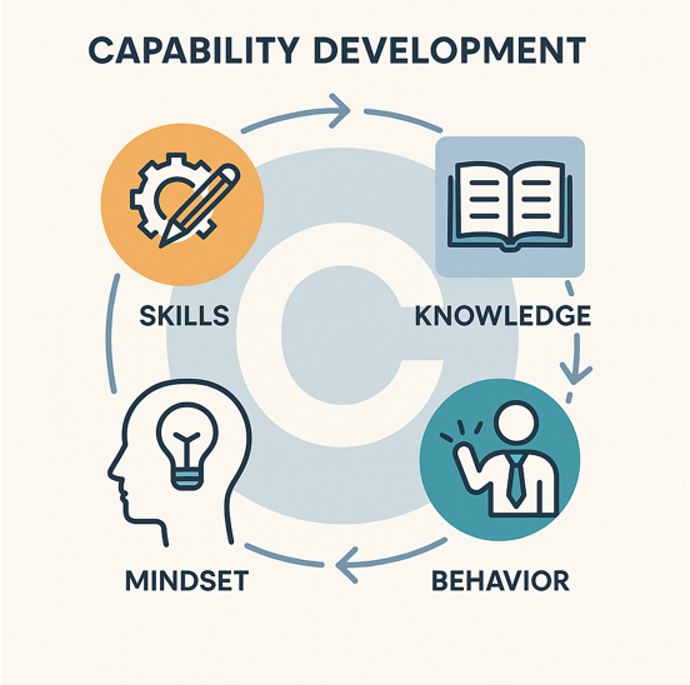
Training turns knowledge into capability
Documenting a sales process is only the first step. A document sitting in a shared folder is not going to improve sales performance by itself.
Salespeople need to understand the process, practise it and receive feedback on how they are applying it. This is where sales training and coaching become particularly important.
For example, a business might introduce a new questioning framework. Rather than simply telling the team to ask better questions, training can give salespeople the opportunity to practise those questions through realistic customer scenarios. A manager can then coach the salesperson on what worked, what was missed and how the conversation could be improved. Over time, the process becomes part of the way the team sells.
That is much more valuable than relying on one person to know how everything works.
Coaching creates consistency
Sales coaching is also important because even the best sales process can deteriorate without reinforcement. A salesperson may attend training on Monday and be enthusiastic about applying the new techniques on Tuesday. Six months later, they may have slipped back into old habits. Regular coaching helps keep the process alive.
Sales managers can use pipeline reviews, one-on-one meetings, role plays and deal reviews to reinforce the behaviours the business wants to see.
Instead of simply asking:
“Did you get the sale?”
They can ask:
• What did you discover about the customer’s needs?
• Who else is involved in the decision?
• What problem are we solving?
• What value did the customer identify?
• What is the next agreed step?
• What could you have done differently?
These conversations develop capability, not just accountability.
The goal isn’t to replace your best salesperson
It is important to make one thing clear. The answer is not to make every salesperson identical. Your top performers should still be recognised, rewarded and challenged to keep improving. The bigger goal is to make sure the business does not become vulnerable because too much knowledge sits with one individual.
A resilient sales team has:
People + Process + Training + Coaching
• The people bring relationships, judgement and personality.
• The process provides structure.
• Training develops the skills.
• Coaching reinforces the behaviours.
Together, these elements create a sales capability that belongs to the organisation, rather than just one salesperson.

What happens when your best salesperson leaves?
Ideally, the answer is:
The business keeps moving. There may still be a gap to fill. Customers may need to be reassigned. The team may need to work harder for a period of time.
But the business does not have to start from scratch. The sales process is documented. Customer information is captured. The team understands how opportunities are managed.
Salespeople have been trained in the same core approach. Managers know how to coach and reinforce it. The business has turned individual knowledge into organisational capability.
And that is one of the most valuable outcomes of sales training.
Build a sales team that doesn’t depend on one person
Your best salesperson should absolutely be an asset to your business, but they should not have to be the system. If your sales results currently depend heavily on a small number of individual performers, it may be time to look at what can be documented, taught, coached and embedded across the wider team.
Contact Healthy Business Builder today to discuss tailored Sales Training for your sales team. Our programs are designed around your business, your people and the sales challenges you want to solve, helping you build stronger skills, more consistent sales behaviours and a more sustainable sales process.
Call 1300 833 574 or Email info@hbbausgroup.com.au
Author – Garret Norris – https://www.linkedin.com/in/garretnorris/